East Bay Seasonal Produce: A Flexible Market Guide
- A season chart is a forecast, not a contract
- Decode the statewide chart at the seasonal edges
- Winter: citrus, greens, roots, and stored crops
- Spring: tender shoots and the first berries
- Summer: tomatoes, stone fruit, and the crowded counter
- Autumn: grapes, figs, pears, and the return of squash
- Check the market before building the menu
- The East Bay contains several growing realities
- “Local” is useful only when defined
- Shop by role, not a rigid list
- Inspect without damaging
- Wash with running water, not soap
- Build meals around perishability
- Let quality change the plan
A season chart is a forecast, not a contract
East Bay produce does not switch from “spring” to “summer” at midnight on a fixed date. Harvest windows overlap. Weather, variety, elevation, microclimate, farm location, storage, and growing method all change what reaches a Walnut Creek or Contra Costa market in a given week.
Use seasonal knowledge to form good questions: What is arriving? What is peaking? What needs to be eaten tonight? Then let the actual stall answer.
The statewide California Grown seasonal chart is a broad planning tool. It cannot promise that a specific farm or market has cherries on Saturday. Confirm schedules with market operators and availability with vendors.
Decode the statewide chart at the seasonal edges
The California Grown chart is most useful at the transitions, when a four-season summary is too blunt. Its published statewide windows place asparagus from March through June; blueberries and cherries beginning in April; peaches, other stone fruit, and summer squash beginning in May; and green beans and eggplant beginning in June. Those are prompts to start looking, not promises of peak quality at every East Bay stall.
The late-year handoff is similarly staggered. The chart begins pears in July, pomegranates and pumpkins in September, and persimmons in October. It carries cucumbers and fresh tomatoes through November and sweet and chile peppers through December. A crop at the edge of its statewide window may be abundant in one week, scarce in the next, or supplied from a different California growing region.
Use this sequence as a five-part market check:
| Planning window | Statewide chart cues | What to ask at the stall |
|---|---|---|
| March-April | Asparagus starts in March; blueberries, cherries, and tomatoes start in April | Is this the first harvest, and how should it be used? |
| May-June | Peaches, other stone fruit, and summer squash start in May; green beans and eggplant in June | Is the crop ready to eat today or meant to hold? |
| July-August | Pears enter the chart in July while summer crops continue | Which variety is this, and what texture signals ripeness? |
| September-October | Pomegranates and pumpkins start in September; persimmons in October | Is this a storage crop, and which persimmon type is it? |
| November-December | Cucumbers and tomatoes extend through November; peppers through December | Is this the last field harvest, protected production, or stored produce? |
The chart itself says seasons can vary with weather and growing conditions. That qualification belongs beside the dates, not hidden after them.
This publication is independent. It has no restaurant lineage, secret farm allotment, or chef standing behind the curtain polishing a fig.
Winter: citrus, greens, roots, and stored crops
Cooler months commonly favour oranges, mandarins, lemons, grapefruit, leafy greens, broccoli-family crops, carrots, beets, radishes, turnips, leeks, and winter squash. Apples, pears, nuts, onions, and potatoes may also appear through storage or longer seasons.
Choose citrus that feels heavy for its size, with skin appropriate to the variety rather than uniformly glossy. Small blemishes are often cosmetic; soft collapsing spots or mould are not.
For leafy greens, look for crisp stems and leaves without slime. A little wilting may recover in cold water, but buy it only if you will use it promptly. Keep greens cold and dry.
Dense winter produce suits roasting, braising, soups, and gratins. In our sheet-pan chicken with market vegetables, roots and winter squash start 15 minutes before the chicken so their cooking clock tells the truth.
Spring: tender shoots and the first berries
Spring can bring asparagus, peas, fava beans, tender herbs, spring onions, lettuces, artichokes, strawberries, and late citrus. Exact timing varies widely.
Asparagus should have tight tips and firm stalks. Thickness reflects variety and maturity more than quality; thick spears can be excellent when peeled at a woody base. Bend-and-snap folklore wastes edible stem, so trim only the dry or fibrous portion.
For peas and favas, ask whether the listed price is for pods or shelled weight. A large bag of pods becomes a modest bowl. This is not deceit; it is botany charging packaging.
Strawberries should smell fragrant and look dry, with no mould. Since berries do not improve after purchase, use the softest first. The small-batch strawberry compote converts 500 grams into a refrigerator sauce without pretending it is shelf-stable jam.
Summer: tomatoes, stone fruit, and the crowded counter
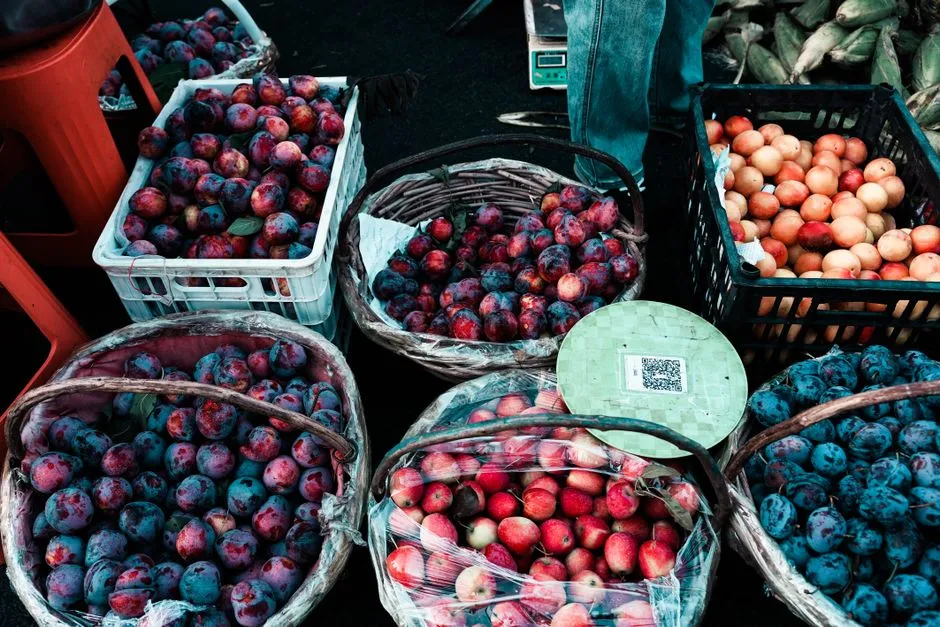
Summer markets often feature tomatoes, peaches, nectarines, plums, apricots, corn, zucchini, eggplant, peppers, cucumbers, green beans, basil, melons, and berries. Heat and harvest timing can shift peaks.
Smell tomatoes near the stem and choose texture for the dish. A very soft tomato belongs in sauce or immediate salad; a firmer one travels better. Refrigeration can reduce aroma, but food safety and ripeness matter: cut tomatoes need refrigeration, and very ripe whole fruit may need cold storage to prevent spoilage. Let chilled tomatoes return toward room temperature before serving when safe and practical.
Stone fruit should yield slightly for immediate eating. Firm fruit may soften at room temperature, but sweetness does not increase dramatically after harvest. Buy a range of ripeness if you want fruit across several days.
Corn begins losing sweetness after harvest, though modern varieties differ. Look for fresh green husks and plump kernels; do not strip every ear at the stall unless the seller invites it.
Our tomato-peach panzanella uses 600 grams tomatoes and 300 grams peaches, so neither ingredient becomes decorative.
Autumn: grapes, figs, pears, and the return of squash
Late summer produce often continues while grapes, figs, apples, pears, persimmons, pomegranates, walnuts, and winter squash expand the table. Autumn is overlap season: a tomato and a persimmon may briefly occupy neighbouring stalls without violating calendar law.
Figs are fragile and should be dry, intact, and gently soft. Refrigerate and use quickly. Persimmon varieties differ: some are eaten firm, while astringent types need to become very soft before eating. Ask the variety rather than learning the distinction through an unforgettable dry mouth.
Choose winter squash with hard skin and no soft spots. Whole uncut squash stores longer than cut pieces, but conditions and variety matter. Once cut, wrap and refrigerate.
Pomegranates and grapes should feel heavy and sound, without leaking fruit. Wash under running water before eating or cutting.
Check the market before building the menu
A seasonal chart answers what might be available. It does not answer whether a particular market is operating today or whether a particular vendor brought that crop. Before leaving, use the market operator's current page to confirm the address, day, hours, seasonal or year-round status, holiday changes, and cancellation notices. Then treat crop availability as a separate question.
For a special purchase such as a flat of strawberries or a large box of tomatoes, contact the farm or market when possible. Ask about quantity, variety, price unit, and whether advance ordering is required. A social post from last summer can suggest a vendor, but it cannot confirm this week's attendance.
At the stall, separate three useful facts:
- Grown where? This identifies the production region without assuming that "East Bay market" means "East Bay farm."
- Harvested when? This helps set the use order, especially for berries, figs, greens, and ripe stone fruit.
- Ready when? A crop can be fresh and still need time before its best eating texture.
That verification loop prevents two errors: using an outdated schedule and planning around an absent crop.
The East Bay contains several growing realities
Contra Costa County includes bay-influenced areas and hotter inland valleys. A crop thriving near Richmond may behave differently near Antioch. UC Master Gardener resources distinguish coastal and inland planting regions for exactly this reason.
Home-garden harvest dates are not identical to commercial availability, but they explain why “East Bay season” is broad. Farms supplying a market may also be outside the county while still within California.
Ask the vendor:
- where the crop was grown;
- which variety it is;
- when it was harvested;
- whether it is ready to eat;
- how they store it; and
- how they like to cook it.
Ask because you are interested, not because the peach is on trial.
“Local” is useful only when defined
Local may mean the county, the Bay Area, a driving radius, or California. No universal distance governs the word in ordinary market conversation.
Proximity can reduce travel time and support direct relationships, but it does not guarantee freshness, labour practices, environmental performance, affordability, or flavour. Those questions need evidence of their own.
Farm-to-table cooking at home can simply mean knowing more about the ingredient, choosing direct or seasonal food when practical, storing it well, and wasting less. It does not require linen, reclaimed wood, or a menu sentence in which the carrot receives a biography longer than the cook's.
Shop by role, not a rigid list
Plan a flexible basket:
- one leafy or herbaceous item;
- one sturdy roasting vegetable;
- one juicy or acidic item;
- one fruit for immediate eating;
- one protein, grain, or legume; and
- one ingredient that can wait.
This supports several meals without requiring exact availability. If tomatoes disappoint, a roasted pepper or citrus segment may fill the acidic role. If peaches are hard, choose ripe plums. If the greens look tired, buy cabbage.
Set a budget before entering. Price per bunch or basket can hide the usable weight. Consider trim and waste. A higher-priced ingredient used completely may cost less per plate than a bargain box that becomes compost with excellent intentions.
Inspect without damaging
Handle delicate fruit only with permission and a light touch. Do not squeeze every peach to discover whether the fifteenth differs politically from the first. Ask the vendor to choose a mix for today and later.
Check the bottom of baskets for mould, leakage, or crushing. Choose precut produce only when properly refrigerated or on ice. Keep it separate from raw meat and poultry in bags and transport.
Bring reusable bags and small rigid containers for berries, figs, or tomatoes. A heavy melon on top of basil is not farm-to-table; it is farm-to-pesto.
Wash with running water, not soap
CDC produce-safety guidance says to wash or scrub fruits and vegetables under running water before eating, cutting, or cooking. Do not use soap, detergent, or commercial produce wash.
Wash hands before and after preparation. Use clean boards and knives. Keep produce away from raw meat, poultry, and seafood. Refrigerate cut, peeled, or cooked produce promptly and keep the refrigerator at 4°C/40°F or colder.
Most whole produce stores better when kept dry and washed just before use. Berries are a good example: added moisture hastens deterioration. Package instructions and individual crop needs still apply.
Build meals around perishability
Eat berries, figs, tender greens, herbs, and very ripe stone fruit first. Tomatoes, peppers, cucumbers, and beans often form the middle of the week. Roots, cabbage, winter squash, onions, apples, and citrus can usually wait longer when sound and correctly stored.
Write a simple order on the refrigerator: “soft first, sturdy later.” It is less glamorous than a meal plan and much harder for parsley to misunderstand.
Toast bread for panzanella, roast mixed vegetables, simmer bruised fruit into compote, freeze herbs in a suitable preparation, and cook greens before they collapse. Waste reduction is mostly attention applied two days earlier.
Let quality change the plan
A seasonal guide narrows the search; it should not override the senses. Buy what looks, smells, and feels good for the intended dish, within budget. Ask where it came from. Keep the answer attached to the ingredient rather than upgrading it into an invented farm story.
The East Bay harvest table is not one aesthetic. It is a series of practical choices between weather, farms, markets, kitchens, and people. The best seasonal habit is not memorizing every month. It is looking closely enough to notice what this week is actually offering.
This independent publication provides general cooking and shopping information, not medical or dietary advice or a guarantee of crop, vendor, or market availability. Confirm current schedules and sourcing directly. Wash hands and produce as directed, prevent cross-contamination, keep perishables at 4 C/40 F or colder, and follow current public-health advice and product labels for allergies, pregnancy, immune status, and individual needs.