Small-Batch Strawberry Compote for the Fridge
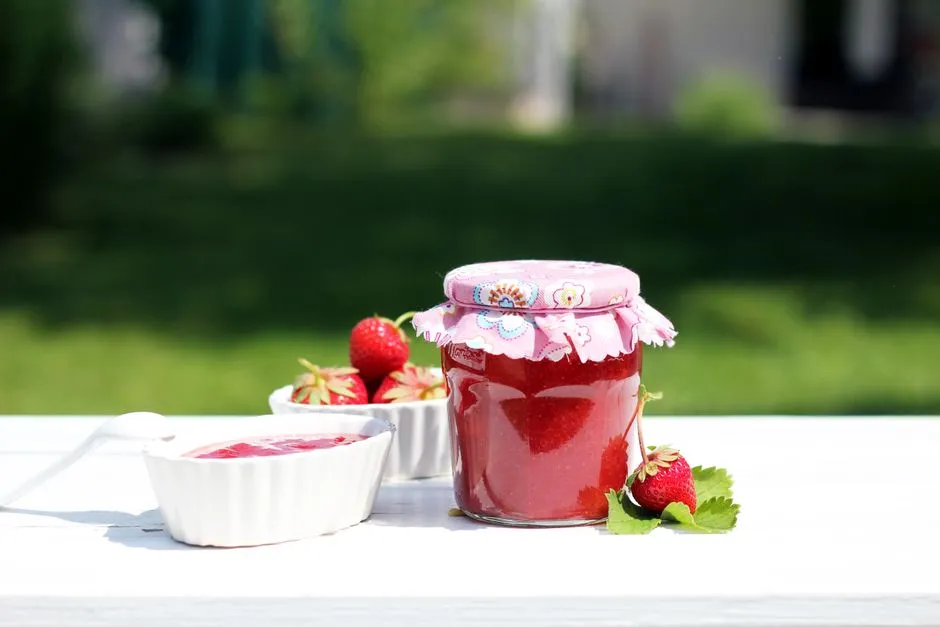
- A refrigerator sauce, clearly labelled
- Yield, timing, and equipment
- Ingredients
- Select and handle the berries
- Macerate for ten minutes
- Cook in a wide pan
- Test texture after a brief cooling
- Scale the formula, not the cooking time
- Cool promptly
- Frozen strawberries work differently
- Adjust sugar without confusing preservation
- Flavour variations in measured amounts
- Freeze in useful portions
- Serve without contaminating the batch
- Sources
A refrigerator sauce, clearly labelled
This compote turns 500 grams of strawberries into about 450 millilitres of spoonable fruit sauce. It uses 75 grams sugar, 15 millilitres lemon juice, and 1 gram measured salt. There is no pectin and no canning process.
That last sentence is a safety boundary. The recipe is for the refrigerator or freezer. A hot jar and a satisfying lid pop do not make an untested preserve shelf-stable. Pantry storage requires a laboratory-tested canning formula followed exactly.
Compote is looser and less sweet than jam. Some berries remain in pieces while released juice reduces into a light syrup. It is useful on yogurt, oatmeal, pancakes, cake, toast, ice cream, or the very plain bowl you promised would count as dessert.
Yield, timing, and equipment
- Prep: 15 minutes
- Macerating: 10 minutes
- Cooking: 8–12 minutes
- Cooling: about 30 minutes before refrigeration
- Yield: about 450 mL, roughly 1.9 US cups
One US cup is 236.6 mL, so 450 ÷ 236.6 = 1.90 cups. The metric yield is primary because berry collapse makes a cup estimate approximate.
Use a wide 2–3 litre stainless-steel saucepan, silicone spatula or wooden spoon, scale, measuring spoon or cylinder, clean heat-safe container, and label.
Avoid reactive unlined aluminium or copper because fruit acid can react with the metal.
Ingredients
- 500 g strawberries after hulling, quartered if large
- 75 g granulated sugar
- 15 mL fresh lemon juice
- 1 g fine salt
Optional: 2 g finely grated lemon zest, 2 mL vanilla extract added off heat, or 1 g freshly ground black pepper. Add one direction, not an entire spice drawer conducting auditions.
The East Bay seasonal produce guide explains why fragrance and condition outrank a fixed calendar date.
Select and handle the berries
Choose dry berries without mould or leaking areas. Deep colour can be useful, but variety affects shade. Smell near the container; ripe strawberries should be fragrant.
Use bruised but sound berries after trimming, provided they have been stored safely and show no mould. Discard a mouldy strawberry and any berries directly touching it, then inspect the rest. USDA food-safety guidance explains that mould can grow below the surface of soft fruit.
Refrigerate berries promptly after shopping. Wash hands, then rinse fruit under cool running water just before using. Do not soak them and do not use soap. Hull after washing so water does not enter through the cut top.
Pat dry. Weigh 500 grams after removing hulls and any damaged parts.
Macerate for ten minutes
Put strawberries, sugar, lemon juice, and salt in the saucepan. Stir gently until the sugar begins dissolving. Leave at room temperature for 10 minutes while the fruit releases juice.
This brief rest gives the pan liquid before heat begins, reducing the chance of dry sugar scorching. It also starts drawing strawberry flavour into the syrup.
Do not extend the room-temperature rest for hours. After the 10-minute maceration, start cooking.
Cook in a wide pan
Set the saucepan over medium heat. Stir as the mixture begins to simmer, scraping the bottom and corners.
Once bubbling gently, cook 8–12 minutes. Stir every minute and more often near the end. Mash roughly one third of the fruit against the pan with the spatula, leaving the rest in pieces.
A wide pan evaporates water faster than a narrow one, so begin checking at eight minutes. The syrup should lightly coat a spoon but still look looser than the desired final texture. It thickens as it cools.
If using lemon zest or black pepper, add it during the last two minutes. Add vanilla off heat.
Do not cook until it behaves like hot jam. Compote should remain fluid. Keep hands clear of steam and bubbling syrup, and use a long-handled utensil.
Test texture after a brief cooling
Place a teaspoon on a cool plate and wait one minute. Drag a finger through it. The line should close slowly while berry pieces remain soft.
If watery, cook another two minutes and retest. If too thick, stir in 15 mL water and warm gently. Remember that different varieties, ripeness, frozen fruit, and pan width affect water release.
Taste carefully after cooling the sample. Add lemon juice 5 mL at a time for brightness. Add sugar 10 g at a time only if needed, simmering long enough to dissolve it.
Scale the formula, not the cooking time
The base ratio for each 100 g prepared strawberries is 15 g sugar, 3 mL lemon juice, and 0.2 g fine salt. That ratio reproduces the starting balance; it does not promise the same cooking time or final yield in a differently filled pan.
For a half batch, use 250 g strawberries, 37.5 g sugar, 7.5 mL lemon juice, and 0.5 g salt. Use a scale that can resolve 0.5 g, or omit the salt rather than estimating a large pinch. Watch the pan as soon as it simmers because a shallow half batch can reduce faster; use the cooled-plate test instead of assigning it an unverified minute range.
For a double batch, use 1,000 g strawberries, 150 g sugar, 30 mL lemon juice, and 2 g salt. Use a wider, larger saucepan or cook two separate batches. Doubling the ingredients in the same pan increases depth and slows evaporation; do not simply double the 8–12-minute range. Judge the syrup with the same cooled-plate test.
Optional flavour additions can scale arithmetically, but taste before using all of them. Lemon zest, vanilla, and pepper do not rise in perfectly linear sensory steps.
Cool promptly
Remove the pan from heat. Transfer compote to a clean shallow heat-safe container rather than leaving it in a deep hot saucepan.
Let steam escape briefly, then refrigerate within two hours of cooking. Do not seal a glass jar tightly while the contents are extremely hot unless the container is designed for that thermal change; sudden temperature differences can break glass.
Once cold, cover securely and label with the cooking date. Keep at 4°C/40°F or colder and use within four days.
Four days follows the general US government limit for refrigerated cooked leftovers. It is a maximum, not a freshness test; discard the compote sooner if storage temperature was not maintained or if it shows mould or spoilage.
Frozen strawberries work differently
Use 500 grams frozen strawberries directly from the freezer. Do not thaw them on the counter. Begin over medium-low heat until they release liquid, then increase to medium.
Frozen berries generally release more water and collapse faster. Cooking may take 12–18 minutes. Skip the 10-minute room-temperature maceration; mix sugar, lemon, salt, and frozen fruit in the pan and start heating.
The result is usually smoother and darker. Taste after cooking because variety and freezing change flavour perception.
Adjust sugar without confusing preservation
For very sweet berries, reduce sugar to 40–50 grams. The compote will be tarter, looser, and may have a shorter peak-quality window. Keep the same four-day maximum.
For dessert use, increase sugar to 100 grams. That still does not create a tested canned preserve. Sugar level alone does not determine safe processing; acidity, solids, jar geometry, headspace, altitude, and time all matter.
For pantry jam, use USDA, National Center for Home Food Preservation, or university-extension instructions. Do not graft their processing time onto this ingredient list.
Flavour variations in measured amounts
For strawberry-balsamic compote, replace 10 mL lemon juice with 10 mL balsamic vinegar, leaving 5 mL lemon. Taste after cooling.
For strawberry-rhubarb, use 350 g strawberries and 150 g thinly sliced rhubarb. Increase sugar to 100 g and cook 12–16 minutes until rhubarb softens.
For mixed berry, replace up to 250 g strawberries with raspberries or blueberries. Seeds and pectin change texture, so adjust cooking by the cool-plate test.
Do not add low-acid vegetables, large quantities of herbs, or alcohol and then assume the same storage behaviour. This remains refrigerator cooking, and the four-day maximum still applies.
Freeze in useful portions
Cool the compote in the refrigerator, then freeze in small airtight containers with expansion space. Ice-cube trays can create small portions; once frozen, transfer cubes to a labelled freezer bag.
Thaw in the refrigerator. Stir after thawing because liquid may separate. Use clean utensils and do not refreeze portions repeatedly handled at the table.
Frozen storage is primarily a quality question when continuously frozen, but flavour and colour decline over time. Use within about three months for best quality.
Serve without contaminating the batch
Spoon out the amount needed with a clean utensil and return the covered container to the refrigerator. Do not dip a spoon that has touched yogurt, toast, or a mouth back into the batch.
At brunch, serve a small bowl and replenish it from cold storage rather than leaving all 450 mL on a warm table. Refrigerate perishable accompaniments too.
The compote can follow sheet-pan chicken with market vegetables or accompany bread after tomato-peach panzanella, though the latter has already made a persuasive case for summer fruit.
Small-batch preserving is deliberately modest: excellent berries, a short simmer, one labelled refrigerator container, and no claim of pantry stability.
Sources
- US Food and Drug Administration: Selecting and Serving Produce Safely — refrigerate strawberries at 40°F or below; wash produce under running water without soap; trim damaged areas and discard rotten produce.
- USDA Food Safety and Inspection Service: Mouldy fruit in a container — discard mouldy soft fruit and pieces directly touching it; inspect and wash the remainder.
- FoodSafety.gov: Four Steps to Food Safety — refrigerate perishables within two hours, use shallow containers for prompt cooling, and keep the refrigerator at 40°F/4°C or below.
- National Center for Home Food Preservation: Strawberry Preserves — a shelf-stable strawberry preserve uses a specified formula, jar preparation, headspace, boiling-water processing, and altitude-dependent times; those instructions do not transfer to this compote.
- National Center for Home Food Preservation: Ensuring Safe Canned Foods — safe processing depends on research-based times, acidity, packing method, jar size, and altitude; a sealed lid alone is not a safety process.