Small-Batch Jam Without Canning: A Cold-Storage Guide
- The no-canner answer is cold storage
- Compote, fridge jam, or freezer fruit?
- What does a canner do that the fridge does not?
- Prepare one market haul safely
- Use one shared small-batch workflow
- Make the compote route when flexibility matters
- Make a soft fridge spread without pretending it is a firm gel
- Freeze fruit now and cook it later
- Cool, label, and store the small batch
- Fix texture problems without changing the safety boundary
- Keep the useful part of preserving small
The no-canner answer is cold storage
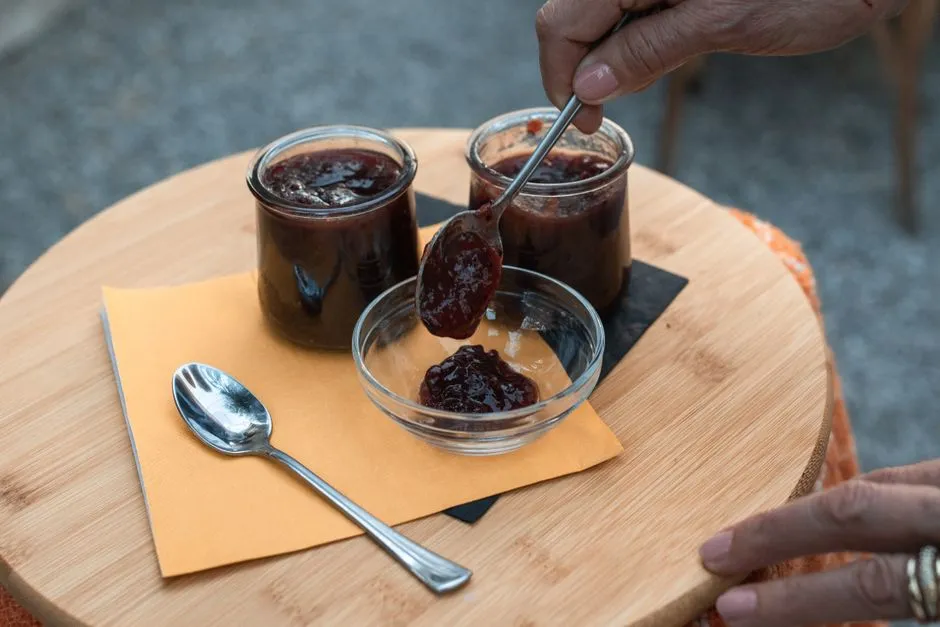
You can make small-batch jam without canning it, but the finished fruit must stay in the refrigerator or freezer. Choose a compote for loose spoonable fruit, a refrigerator jam for a thicker spread, or plain frozen fruit when you want the most flexibility later. None of these becomes shelf-stable because it was poured into a jar while hot.
That trade is often useful. One market basket does not always justify a canner, a case of jars, and an afternoon of processing. A saucepan, scale, clean container, refrigerator, and freezer can turn a modest amount of ripe fruit into breakfast for this week or ingredients for another month. The rule is simply to label the storage method as carefully as the fruit.
Compote, fridge jam, or freezer fruit?
Start with what you want to eat, not with the container you happen to own.
| Method | Finished texture | Best reason to choose it | Storage plan |
|---|---|---|---|
| Compote | Fruit pieces in a loose syrup | Fast, adaptable, lower-sugar cooking | Refrigerate promptly; freeze extra |
| Soft fridge jam | Mashed fruit reduced to a spoonable spread | Jam-like use without promising a firm gel | Refrigerate promptly; freeze extra |
| Tested refrigerator/freezer jam | A more predictable pectin-set spread | Reliable set when the exact formula is followed | Follow the tested recipe’s cold-storage directions |
| Plain frozen fruit | Whole, sliced, crushed, or puréed fruit | Maximum choice for later pies, sauces, smoothies, or jam | Freeze promptly in useful portions |
Compote is the forgiving route. Its goal is tender fruit and lightly thickened juice, so sugar can be adjusted for taste and the result can remain saucy. Our small-batch strawberry compote gives one complete 500-gram example.
Fridge jam aims for a spreadable body. Fruit species, ripeness, acid, sugar, pectin, pan width, and endpoint all affect the set. If a repeatable gel matters, use a tested refrigerator or freezer-jam formula from the National Center for Home Food Preservation, a university extension program, or the pectin manufacturer, and follow its fruit, sugar, acid, and pectin quantities exactly.
Freezing fruit postpones the decision. It preserves neither a crisp fresh texture nor a pantry-ready jar, but it lets you measure a market haul now and turn it into a cooked sauce later.
What does a canner do that the fridge does not?
A boiling-water canning recipe specifies the fruit mixture, jar size, headspace, processing time, and altitude adjustment needed for shelf storage. The National Center for Home Food Preservation explains why it recommends processing jams and jellies: hot filling alone may leave airborne mold spores and a weaker vacuum, while inversion adds burn and leakage risks.
Refrigeration and freezing take a different route. Cold temperatures slow microbial growth; they do not validate an improvised canning formula or sterilize a sealed jar. The FDA says refrigerators should operate at 4°C/40°F or below and freezers at -18°C/0°F, and that prepared food should be refrigerated or frozen within two hours.
For every recipe in this guide:
- use a clean food-safe container;
- write “refrigerate” or “freeze” on the label;
- add the cooking or packing date;
- do not store it in a cupboard, even if the lid pulls inward; and
- use a research-tested canning recipe unchanged if pantry storage is the goal.
The cold jar belongs in the refrigerator. The pantry jar belongs to a complete tested process. They may look alike on the counter, which is why the label matters.
Prepare one market haul safely
Sort the fruit before washing. Discard anything rotten or moldy. Trim bruised or damaged areas from otherwise sound fruit. The FDA’s produce-cleaning guidance says to rinse fruit under plain running water, without soap or produce wash, and dry it with a clean cloth or paper towel.
Remove hulls, stems, pits, cores, and damaged sections, then weigh the prepared fruit. Writing down that number makes a small batch genuinely repeatable. “One basket” can change size between sellers and weeks; 500 grams remains 500 grams even when the peaches are showing off.
Keep raw meat, poultry, seafood, and their utensils away from ready-to-eat fruit and clean equipment. Wash hands, counter, knife, board, pan, and containers before beginning.
Use sound ripe fruit for the best flavor. Overripe but unspoiled fruit can work in a compote, where collapse is welcome. Firmer pieces are better when you want visible shape. Mold is not a soft spot to trim from a berry or a finished spread; it is a reason to discard the affected food.
Use one shared small-batch workflow
The three paths share a short sequence:
- Weigh prepared fruit. Five hundred grams is a manageable saucepan batch.
- Choose the endpoint. Loose compote, soft spread, tested pectin gel, or uncooked freezer portion.
- Match the sugar to the method. Taste can guide a compote; a tested pectin recipe needs its stated ratio.
- Use a wide enough pan. A 2- to 3-litre saucepan gives 500 grams of fruit room to simmer without filling the stove with foam.
- Judge the cooled texture. Hot fruit looks thinner than it will after chilling.
- Transfer to shallow containers. A small portion cools faster than a deep pot.
- Refrigerate within two hours. Do not leave the batch on the counter until bedtime.
- Label and freeze what will not be used promptly. Portion first so the whole batch need not be thawed.
This is a workflow, not a universal jam formula. The more exact the desired gel, the less room there is to improvise the ingredient ratio.
Make the compote route when flexibility matters
For a loose, spoonable compote, use this ratio for every 100 grams prepared fruit:
- 100 g fruit
- 15 g granulated sugar
- 3 mL lemon juice
- 0.2 g fine salt
A 500-gram batch therefore uses 75 grams sugar, 15 millilitres lemon juice, and 1 gram salt. This is the same working formula as our strawberry version and makes the arithmetic easy to audit.
Combine everything in a wide saucepan and rest for 10 minutes if the fruit is fresh and juicy. Cook over medium heat until the fruit is tender and the liquid lightly coats a spoon, usually 8 to 15 minutes depending on the fruit, cut size, ripeness, and pan. Stir at least every minute and more often as the liquid reduces.
The time is a checking range, not a preservation step. Remove a teaspoon, cool it for one minute on a plate, and judge that sample. If it is watery, cook two minutes more and retest. If it becomes thicker than wanted, stir in 15 millilitres water and warm gently.
Use this route for berries, peeled chopped peaches, plums, apricots, or a mixture that will be served as sauce. Lemon brightens flavor and can support texture, but in this flexible refrigerator formula it is not permission for room-temperature storage.
Make a soft fridge spread without pretending it is a firm gel
For a thicker but deliberately soft fruit spread, begin with:
- 500 g prepared berries or finely chopped stone fruit
- 200 g granulated sugar
- 30 mL lemon juice
- 1 g fine salt
Crush roughly half the fruit in a wide 2- to 3-litre saucepan. Add the remaining ingredients and stir for 10 minutes off heat so juice begins dissolving the sugar. Bring to a lively simmer over medium heat, then adjust the burner to prevent scorching.
Cook 12 to 25 minutes, stirring frequently and scraping the bottom. Start testing early for berries and later for watery stone fruit. Put a teaspoon on a chilled plate for one minute, then push through it. For a soft spread, the track should remain visible briefly and the liquid should not rush across the plate. Stop before the mixture becomes stiff; it thickens further when cold.
This ratio is an adaptable refrigerated spread, not a tested shelf-stable jam and not a guaranteed pectin gel. High-pectin plums may set more firmly than strawberries or ripe peaches. If the cold result is loose, call it sauce and use it well. Texture is not a food-safety test.
If you want a classic gel, do not keep adding sugar by instinct. Choose a published refrigerator/freezer-jam recipe or a low-sugar pectin formula and follow it exactly. The NCHFP treats freezer and refrigerator jams as a distinct cold-stored category, separate from tested, processed home-canned jams.
Freeze fruit now and cook it later
Freezing is the best route when the fruit is sound but dinner has already won the evening. Prepare the fruit, then choose a pack:
- Tray pack: Arrange dry whole berries or pieces in one layer, freeze until firm, then transfer promptly to an airtight freezer container. Pieces remain easier to remove individually.
- Dry pack: Put clean, prepared fruit directly into freezer containers. It may freeze into a block, which is fine for a future compote.
- Measured crush or purée: Pack the exact weight needed for a later recipe and record that weight on the label.
The NCHFP’s berry-freezing guidance recommends airtight freezer packaging and at least 1/2 inch (1.3 centimetres) headspace in rigid containers to allow expansion. It also advises recording any sugar added before freezing so that amount can be counted in the final recipe.
Use freezer-safe straight-sided jars or containers intended for freezing. Cool cooked fruit in the refrigerator before freezing it. Do not pour boiling spread into cold glass or move a very hot glass jar directly into the freezer; rapid temperature change can break glass.
For this guide, use frozen compote, spread, or prepared fruit within about three months for best color and flavor. That is a quality target, not a claim that food becomes unsafe on day 91. FoodSafety.gov explains that freezer time limits are for quality and that food held continuously at -18°C/0°F remains safe indefinitely while frozen.
Thaw in the refrigerator, not on the counter. Expect softer fruit and some released liquid because freezing damages cell structure. Include that liquid in a compote, then extend cooking as needed rather than adding more sugar automatically.
Cool, label, and store the small batch
Transfer cooked fruit to one or more clean, shallow, heat-safe containers. Refrigerate promptly and always within two hours of cooking. Hot food can go into the refrigerator; dividing it into shallow containers helps it cool. Leave enough room around containers for cold air to circulate.
Once cold, cover tightly. A useful label includes:
- fruit and method;
- cooking date;
- “refrigerate” or “freeze”;
- any added sugar already included; and
- a use-by target.
The adaptable compote and soft spread in this guide are not standardized full-sugar or pectin products. Use them within four days under refrigeration at 4°C/40°F or colder, following the same conservative limit used in our strawberry compote. Freeze earlier if that schedule is unrealistic.
Some tested refrigerator/freezer-jam formulas provide longer cold-storage times. Follow the exact limit attached to that exact formula; do not transfer it to a lower-sugar recipe simply because both are served from jars.
Use a clean spoon, remove only what you need, and return the container to the refrigerator. If you see mold or signs of fermentation or spoilage, discard the entire contents. NCHFP specifically says not to scoop mold from jam or jelly and keep the rest.
Fix texture problems without changing the safety boundary
The compote or spread is runny
Cool a spoonful before deciding. If it is still too loose, return the batch to a clean saucepan, simmer two minutes, and test again. A wider pan evaporates water faster than a narrow one. Frozen fruit and very ripe peaches often release more liquid.
For a pectin recipe, use only its stated remake instructions. Adding extra pectin, acid, or sugar without recalculating the whole formula can create a gummy result and does not turn the jar shelf-stable.
The bottom is scorching
Move the pan off heat. Do not scrape the burned layer into clean fruit. Transfer the unburned upper portion to another pan, leaving the bottom behind, and taste a fully cooled sample. If the scorched flavor is present, discard it.
Next time, use a heavier pan, lower the heat once simmering, and stir more often near the endpoint. A double batch in the same pan takes longer and is harder to heat evenly; two normal batches are easier to control.
The flavor is too sweet
For compote, add lemon juice 5 millilitres at a time to a cooled sample, then scale the preferred adjustment to the batch. You can also serve the fruit with plain yogurt, oats, or an unsweetened cake.
Do not reduce sugar mid-recipe in a traditional pectin jam unless its directions allow it. For the next batch, choose a tested low- or no-sugar pectin formula rather than editing a standard formula and hoping the gel agrees.
The fruit is dull and pasty
The batch likely cooked too long or the pieces began too small. Stop when a cooled sample reaches the desired body, because the refrigerator adds more thickness. For visible fruit next time, reserve one-third of the pieces and add them partway through cooking.
Keep the useful part of preserving small
One excellent peach does not need a canning project built around it. Two baskets of berries do need a decision before they soften. Use the East Bay seasonal produce guide to shop by condition rather than forcing a calendar, then choose the least elaborate method that fits the fruit.
Make compote when you want fruit and syrup. Make a soft fridge spread when you want something toast can hold. Follow an exact tested refrigerator/freezer-jam recipe when a reliable gel matters. Freeze plain fruit when the future use is still undecided.
All four choices are legitimate preservation work. They just do not make the same promise. Without a tested canning process, the promise is a clearly labelled refrigerator container or freezer portion—not a shelf-stable jar.