Sheet-Pan Chicken With Market Vegetables
- One pan, two vegetable clocks
- Timing, yield, and equipment
- Ingredients
- Handle raw chicken separately
- Cut vegetables by density
- Season the firm vegetables
- Season the chicken without contaminating the jar
- Add chicken and quick vegetables
- Measure every thigh
- Finish texture independently
- Seasonal vegetable combinations
- Boneless thighs and chicken breasts
- Serve and link the market table
- Cool leftovers promptly
One pan, two vegetable clocks
Chicken thighs and market vegetables can share a tray, but they do not automatically share a finish time. Dense carrots, potatoes, or winter squash need a head start. Peppers, zucchini, mushrooms, tomatoes, or green beans can join with the chicken or later.
This formula starts 800 grams of firm vegetables for 15 minutes, then adds 1.2 kilograms of bone-in chicken thighs and 400 grams of quicker vegetables for another 30–40 minutes. It serves four to six.
The thermometer, not the timer or skin colour, determines when chicken is safe. USDA guidance requires poultry to reach at least 74°C/165°F. The Celsius conversion of 165°F is 73.9°C, rounded to 74°C.
Timing, yield, and equipment
- Prep: 25 minutes
- Firm-vegetable head start: 15 minutes
- Chicken and remaining roast: 30–40 minutes
- Rest: 5 minutes
- Total: about 1 hour 20 minutes
- Yield: 4–6 servings
Use a large sturdy rimmed metal sheet pan, approximately 33 × 46 cm, plus a mixing bowl, clean platter, tongs, and instant-read thermometer. A smaller crowded pan traps steam; use two pans if necessary and rotate them between racks.
Heat a conventional oven to 220°C/428°F. The conversion is (220 × 9 ÷ 5) + 32 = 428. Follow the appliance maker's adjustment for fan convection.
Ingredients
- 1.2 kg bone-in, skin-on chicken thighs, about 6 medium pieces
- 800 g firm vegetables, cut into 3 cm pieces
- 400 g quicker-cooking vegetables, cut as directed below
- 60 mL olive oil, divided
- 16 g fine salt, divided
- 3 g black pepper
- 10 g garlic, finely grated or chopped
- 10 g fresh sturdy herbs such as rosemary or thyme, chopped, or 3 g dried herbs
- 1 lemon, about 120 g, cut into wedges for serving
A dependable firm mix is 400 g carrots and 400 g peeled winter squash. A quicker mix is 250 g sweet peppers in wide strips and 150 g cherry tomatoes. Potatoes, turnips, parsnips, onions, zucchini, mushrooms, or green beans can substitute according to their cooking speed.
The East Bay seasonal produce guide helps choose by role rather than forcing January zucchini to honour a recipe photograph.
Handle raw chicken separately
Keep chicken refrigerated at 4°C/40°F or colder and cook or freeze according to its package and current safety guidance. Use a separate board and utensils from produce. Wash hands with soap after handling it.
Do not rinse raw chicken. Water can splash contamination around the sink and counter. Pat it dry with disposable paper, discard the paper, and wash hands.
Set aside a clean platter and clean tongs for cooked chicken. Do not return it to a plate that held raw poultry.
Cut vegetables by density
Uniform cut size matters. Dense vegetables should be around 3 cm so they cook through without burning. Carrot pieces can be slightly smaller than squash or potato because carrots often remain firm longer.
Cut peppers into 3 cm strips, zucchini into thick half-moons, mushrooms in halves or quarters, and green beans left whole after trimming. Keep cherry tomatoes whole unless large.
Wash produce under running water before cutting. Do not use soap. Dry it so roasting begins with browning rather than a steam meeting.
If changing the vegetable mix, keep the total weights: 800 g firm plus 400 g quick. That maintains pan coverage and seasoning. If everything is dense, start all 1.2 kg for 15 minutes. If everything cooks quickly, skip the head start but begin checking vegetables before chicken finishes.
Season the firm vegetables
Put the 800 g firm vegetables in the mixing bowl. Add 25 mL olive oil, 6 g salt, half the pepper, and half the herbs. Toss until surfaces are lightly coated.
Spread on the sheet pan with space between pieces. Roast for 15 minutes. Use this time to season the chicken and quicker vegetables, cleaning hands and surfaces between tasks.
The head start is not optional when using the specified carrots and squash. Adding everything together often produces safe chicken beside vegetables still applying for raw status.
Season the chicken without contaminating the jar
In a clean small bowl, combine 25 mL olive oil, 8 g salt, remaining pepper, garlic, and remaining herbs. Spoon the mixture over the chicken rather than touching raw chicken and returning to a shared oil bottle or salt cellar.
Rub seasoning over skin and exposed meat. Patting the chicken dry first supports browning.
If the thighs are unusually small or boneless, they will cook faster. Keep the same temperature rule and begin checking early.
Add chicken and quick vegetables
After the firm vegetables roast 15 minutes, remove the pan carefully. Turn them with a clean spatula and push them into an even arrangement.
Place chicken thighs skin-side up among the vegetables, leaving space around each. Toss the 400 g quick vegetables with remaining 10 mL oil and 2 g salt, then add them around the chicken.
Return the pan to the oven. Roast 20 minutes, then rotate the pan front to back. Do not turn the chicken; keeping skin upward supports browning.
Continue 10–20 minutes. Start temperature checks at 30 minutes after the chicken entered.
Measure every thigh
Insert an instant-read thermometer into the thickest meat without touching bone. Check each piece because thickness and position differ. The minimum is 74°C/165°F.
For a thin piece, insert the probe from the side so its sensing area reaches the centre. Clean the probe after contact with undercooked chicken before checking another piece later.
Colour is not a safety test. USDA notes that safely cooked chicken can remain pink, while browned surfaces do not prove the centre is hot enough.
Move thighs that reach temperature to the clean platter. Return undercooked pieces to the oven. If vegetables are ready first, move them to another clean dish and keep warm.
Finish texture independently
Chicken thighs may be more tender at temperatures above the minimum because connective tissue continues softening, but safety is established at 74°C/165°F. Choose further cooking for texture without drying smaller pieces.
If chicken is safe but skin is pale, move cooked vegetables away and broil the pan briefly, watching continuously. The broiler can change from promising to smoke-alarm networking event in under a minute.
Test vegetables with a fork. They should be tender with browned edges. Continue roasting them after removing chicken if needed.
Rest chicken five minutes. Squeeze lemon over the tray only after tasting; acid brightens vegetables but cannot repair missing salt or burned garlic.
Seasonal vegetable combinations
For winter, use carrots and winter squash as the firm group, with onion wedges and mushrooms joining later.
For spring, start small potatoes and carrots; add asparagus pieces in only the final 12–15 minutes. Peas are better stirred into hot vegetables after roasting or cooked separately.
For summer, start potatoes or thick onion wedges, then add peppers, zucchini, cherry tomatoes, and eggplant. Eggplant needs enough oil and space to brown.
For autumn, use delicata or butternut squash with carrots, then add apples in thick wedges during the final 15 minutes if a sweet-savory combination appeals. Apples soften at different rates; choose firm baking fruit.
Maintain total weight and pan space. A market haul cannot all become dinner at once simply because it fits emotionally.
Boneless thighs and chicken breasts
Boneless thighs cook faster. Give firm vegetables a 25-minute head start, then add chicken and start checking after 18–20 minutes. Every piece must still reach 74°C/165°F.
Chicken breasts vary dramatically in thickness and can dry. Use pieces of similar size, add them after the vegetable head start, and remove individually at safe temperature. Do not pound bone-in pieces; choose an appropriate recipe variation.
Cooking times are estimates. Thermometer readings and vegetable tenderness control the finish.
Discard any seasoning mixture or utensil that touched raw chicken unless it is thoroughly cooked or washed. Pan juices are part of the finished dish only after every nearby chicken piece has reached the safe temperature; never spoon early raw-poultry juices over food already removed for serving.
Serve and link the market table
Serve directly from the pan only after moving it to a heat-safe surface and replacing any utensils contaminated by raw chicken. Spoon juices over vegetables.
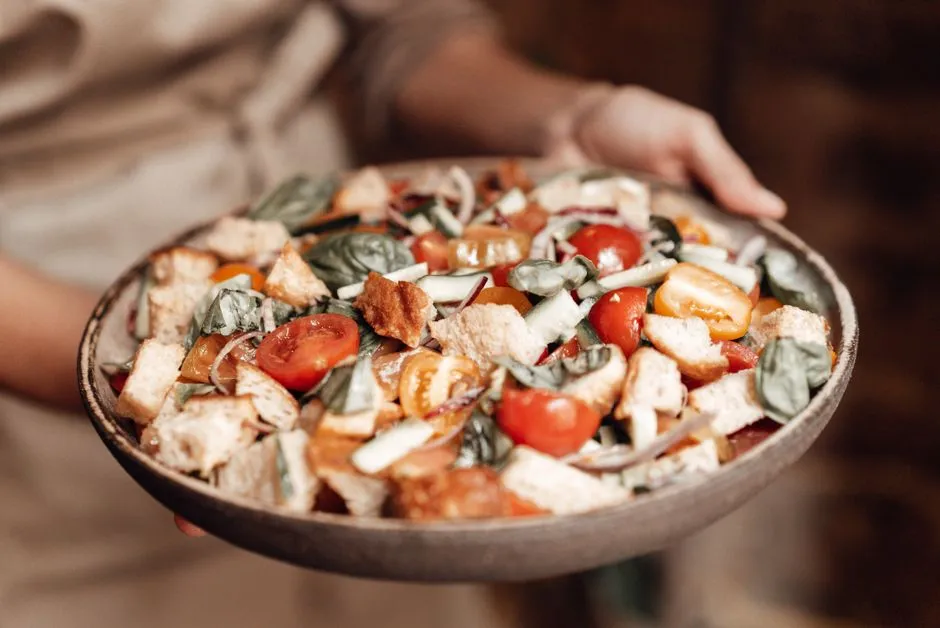
A bright side such as tomato-peach panzanella suits summer. The small-batch strawberry compote makes a simple dessert topping without asking dinner to become a restaurant tasting menu.
Cool leftovers promptly
Refrigerate chicken and vegetables within two hours, or within one hour if the air temperature is above 32°C/90°F. Divide into shallow containers so food cools quickly.
USDA chicken storage guidance gives cooked chicken three to four days at 4°C/40°F or colder. Reheat leftovers to 74°C/165°F.
Freeze portions within the refrigerator window if they will not be used. Thaw safely in the refrigerator, cold water in a leakproof package, or microwave followed by immediate reheating.
Discard food with uncertain time or temperature history. A market vegetable deserves careful cooking, and the chicken beside it deserves a thermometer, clean tongs, and no improvisational optimism.